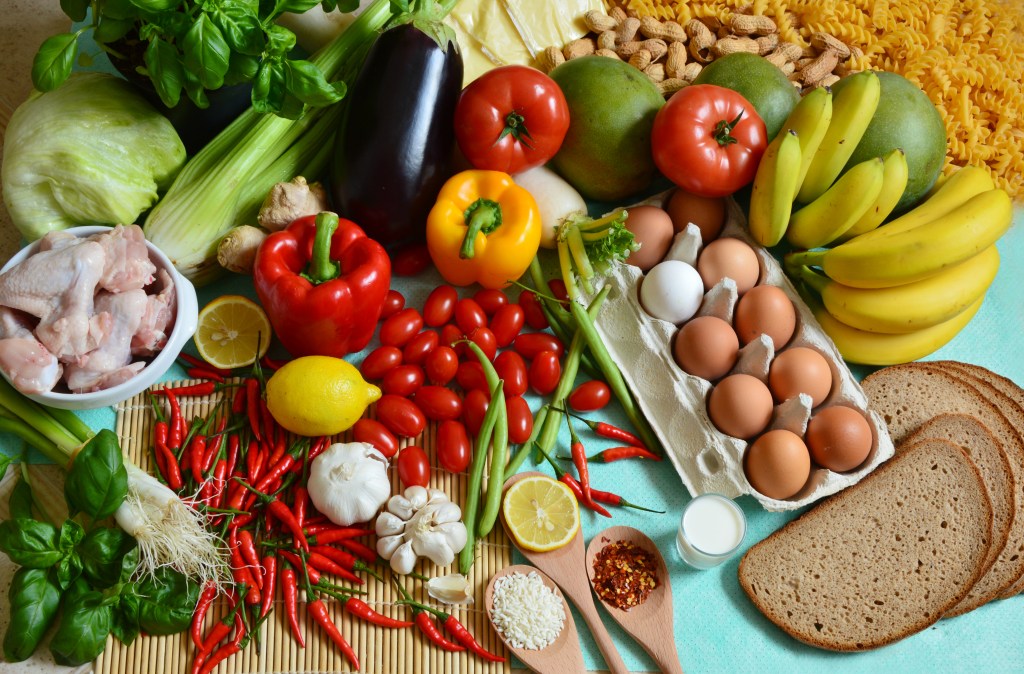
I often get asked, “what does it take to get healthy?” My answer every time is the same. You are what you eat. I’m pretty sure people know the answer, but they wish for a simpler one. It is so hard as it takes a disciplined approach. Temptations are everywhere, making it challenging to stay the course. I tell people you have to want it and be completely motivated and determined. That typically happens when you see the value in eating well. I advise people to start with eating balanced meals. This means staying away from fad diets that cause you to eliminate certain food groups. They are only good if you are trying to identify food intolerances/sensitivities. God purposely made a variety of foods because each type contains specific nutrients that allow your body to function at its best.
The Food Pyramid, now the Food Plate, identifies what foods and servings one should eat daily. You need 6-11 servings of bread, rice, cereal, or pasta. Whole grains are important because they are filled with fiber, b-vitamins, iron, magnesium, and selenium. It is also recommended to eat 2-4 servings of fruit. Fruits provide a wide range of antioxidants, such as flavonoids. Plus, you need around 3-5 servings of vegetables. They are rich in potassium, vitamin C &A, folate acid, and fiber. It is also recommended to eat/drink 2-3 servings of dairy; dairy is rich in protein and calcium. Lastly, it is good to eat around 2-3 servings of meat, dry beans, eggs, poultry, fish, and nuts. Meat is one of the primary sources of vitamin B-12. Other nutrients include iron, zinc, and protein.
Another thing to consider when eating all these essential food groups is that whole grain is better than refined grains such as white bread, as they typically remove fiber and contain higher sugar levels. Also, it’s better to eat fresh fruits and vegetables versus can or frozen, but frozen is better than canned. Most canning processes remove vitamin C, one of the most important nutrients of fruit and vegetables.
I hear so many people say, well, I can take a supplement to make up for my lack of fruits and vegetables. First off, supplements are not meant to replace foods. They cannot replicate all the nutrients of whole foods. Actual food offers better nutritional value, especially macronutrients and protective agents such as phytochemicals. We all get busy, which resorts to eating on the run, equating to processed food. Please note that it is helpful for some to use supplements, such as a pregnant mom eating for two or someone who can’t eat certain types of foods due to allergies or intolerances. Also, remind yourself that these products can be pricey and add up very quickly, and are not regulated by the Food and Drug Administration (FDA).
Eating healthy is consuming a balanced diet period. Stay on course by following the Food Plate. Plan for those busy weeks so that you don’t fall into the trap of eating poorly. It’s all about making it a priority. Every Sunday night, I cut up fresh fruits and vegetables so that our family can grab them as we go. It makes it easier to eat healthy when we make it readily available. It has become routine at this point. So, start the process of allowing your body to receive the nutrients it desperately needs to function at an optimal level.
 taking-ownership-of-your-life.com
Leave a comment